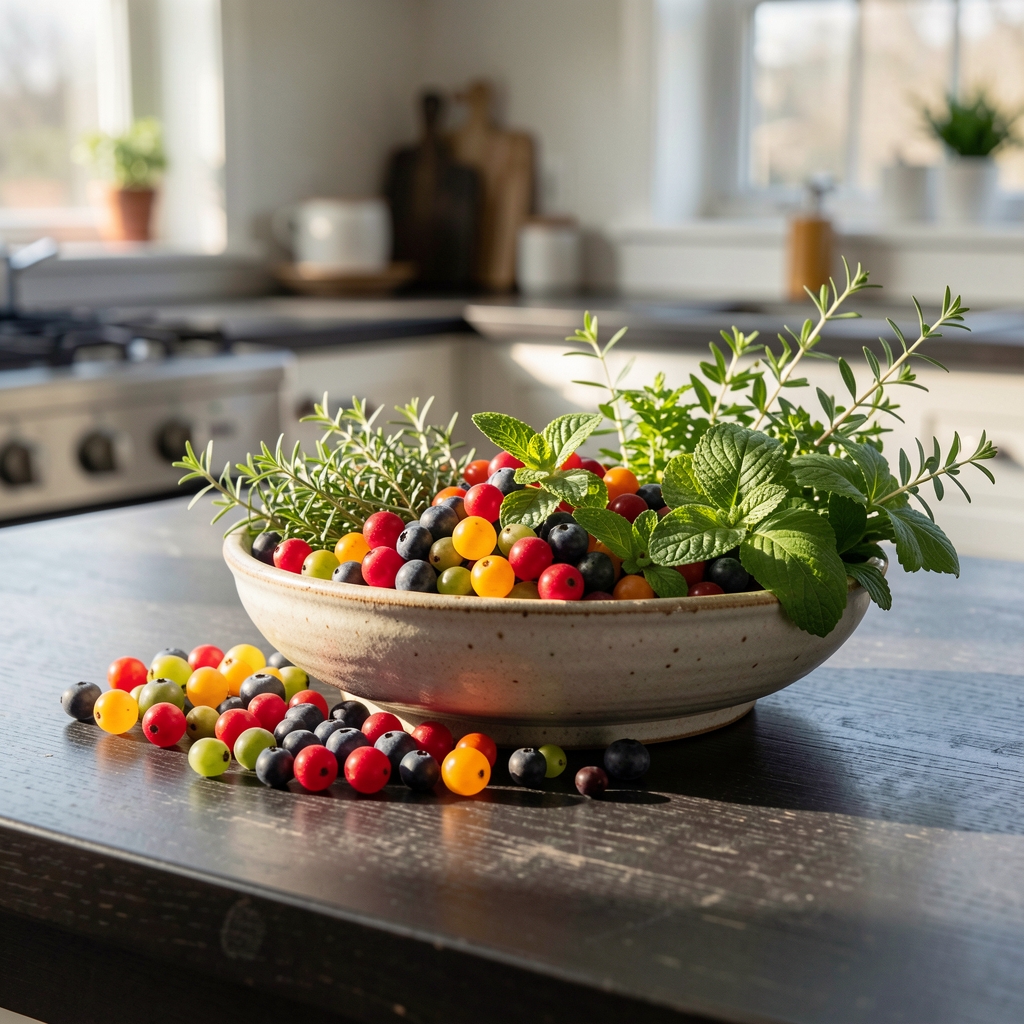
Antioxidants are compounds discussed in relation to oxidative balance, food quality and the natural ageing process. In skin health information, the word can become a catch-all, so this editorial overview slows the conversation down. It looks at colourful plant foods, the role of daylight exposure, the difference between a laboratory finding and an everyday dietary pattern, and the careful language used in supplement discussions. Adults over 40 deserve information that is neither alarmist nor dismissive. A balanced diet and a varied routine offer a more useful frame than a single ingredient promoted as an answer to every question.
Oxidative balance
Cells produce reactive molecules as part of normal activity. Antioxidant systems help maintain balance, and the body uses an interconnected network rather than one isolated substance.
Food sources
Berries, herbs, pulses, vegetables, nuts and whole grains provide a broad range of compounds. Colour and variety can be practical ways to think about a diverse plate.
Daylight and routine
Environmental exposure contributes to the wider story of skin ageing. A considered routine recognises daylight, sleep, smoking, nutrition and climate as different influences.
Supplement language
High-dose language can sound more persuasive than the underlying evidence. Readers should look for the exact measure, population and duration before drawing conclusions.
Reading prompts
- What does antioxidant mean in this specific article?
- Is the evidence from food, cells or people?
- Does the conclusion match the size of the finding?
Key takeaways
- Oxidative balance is a network, not a single switch.
- Variety gives food conversations useful context.
- Research setting matters as much as the headline.